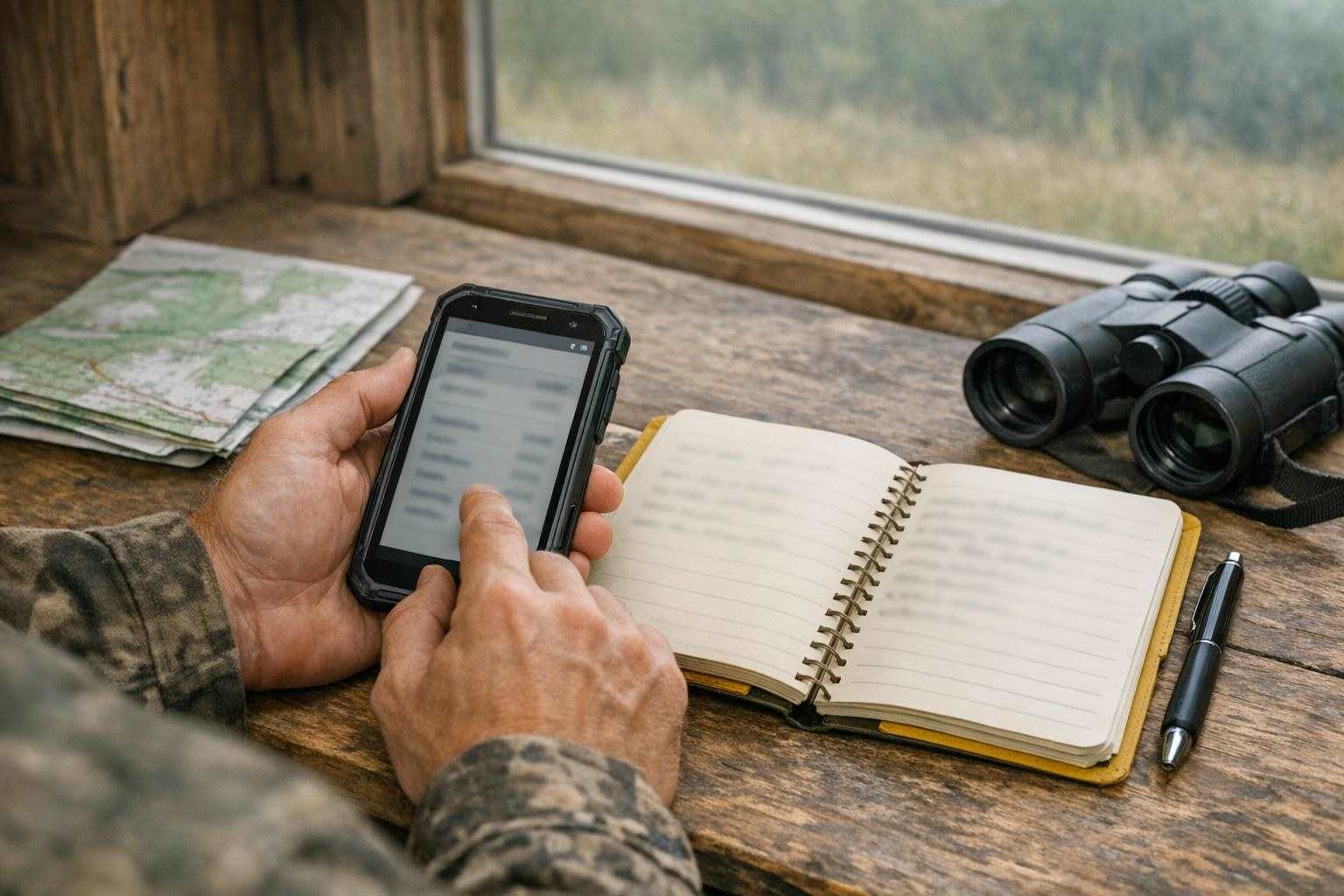

There is a tendency for permission information to get scattered around at the end of the season. A contact in your phone under an old nickname from years gone by, a text message in an old thread referring to a gate, a crumpled up map that no longer corresponds with the land as it is now. Recording these details and setting up a number of simple hunting permission contacts, access notes and follow-up tasks and then keeping them updated throughout the season so that they are still relevant at the end of the season is relatively easy to do and will mean that you can refer back to them the following year and avoid having to make potentially embarrassing or boozer induced phone calls, missing out on opportunities or even damaging relationships with landowners.
Start by finding the warning signs
Not being able to recall whether a landowner controls a particular parcel of land or whether permission for access to a property to hunt was granted for only one season could pose problems. The hunter might have to rely on his memory of where he parked his vehicle and how he got in to a property. Sometimes the list of contacts might appear to contain all the names of people with whom the hunter has had permission to hunt but when he tries to look up details of earlier conversations with them he will find that there is no record of when he last spoke to them or what had been agreed.
Review your records. Look for things like: names but no addresses; old phone numbers; uncompleted addresses; old messages and no summary of the conversation. Note conflicts on duplicate records and indicate that they need to be verified.
Old access information is not a standing invitation. Remember the property, activity, season and even the group of hunters that were covered in your conversation. Verify current requirements and local rules with the landowner or check the official government website before heading off hunting.
Build a record that answers practical questions
You should be able to answer the following 5 key questions using your new access information: Who is the contact for this record? What property/area does this note refer to? What permission was granted? When did you have this conversation? What still needs to be confirmed?
When recording details, it is best to keep the format consistent from record to record. The majority of details will be stored in a simple digital note or spreadsheet. To ensure that the necessary information has been recorded, ensure that the following questions have been answered for each contact: Who are you? What property/area does this note relate to? What permission did we discuss? When did we have this conversation? What do I need to do next to confirm this?
Do not confuse confirmed information with your assumptions. 'Use the north gate after calling' is very different from 'the north gate will probably be open.' This can be easily mistaken after a long period of time or by someone else eg. another hunter reading through notes before the season. Use simple labels like 'Confirmed', 'Needs checking' and 'No longer current' rather than relying on color to denote these.
Keep access notes tied to the right place
Contact details are half the story of a permit – the other half relates to how the agreement is to be implemented on the ground. A simple note attached to the relevant map symbol or for the relevant part of the land would be sufficient.
Record other key information for access to land and premises including where you can park, what gates and paths you can use, where there are specific areas that you should avoid, whether there is livestock on the premises and whether you need to check in with the contact prior to entry. Verify details verbally recorded against current circumstances to ensure that you are complying with current arrangements.
As always, check the situation on the ground, before you head off, for the latest information. Compare your old notes for the access point with your most recent conversation and current situation. If you have to enter private land check if you have permission to do so and, if necessary, ring the landowner for confirmation before you go.
Use the off-season to repair weak relationships
Use the time off to review previous years' arrangements. Identify out-standing promises, unanswered messages, forgotten check-ins and unfulfilled requests for information recorded as 'ask again later'. These are not administrative details, they represent relationships that need some work before you can ask for permission again.
A short polite message is much better than trying to contact someone for permission at the last minute. Show your appreciation for the access that has been granted in previous years and then ask if there have been any changes. Make it clear that you will abide by the current circumstances and will follow whatever instructions the landowner gives you.
Good landowner relationships are about accurate reporting of the terms and conditions of permission that have been granted. So record that you were asked to close a particular gate, that you had been asked to avoid a particular area, that you had been asked to clear up any litter, and that you had been asked to report any property damage. Then note whether you have complied with these requests or not and put a line through them when you have.
Make permission tracking easy to maintain
The best way to maintain records is to use a single method that will work for you and then use temporary means (like paper or message threads) for review purposes only. Then be sure to make a backup and protect it as well so that you do not create a secondary, outdated record inadvertently that others will mistake for current.
Reviews of contacts and of permission arrangements should be undertaken on an annual basis (e.g. between the end of the hunting season and the commencement of next season's planning). In the review of current contacts for permission to access land for hunting, all contacts that are no longer of any relevance should be archived; all duplicate entries for the same contact should be merged; all unknowns reported and the required conversations recorded. In addition to a simple 'yes'/'no' field for 'Status' (e.g. Current conversation needed; Confirmed for set period; Declined; Unknown), provide space for comments as needed.
Also when recording permission information for access, always keep the facts straight and avoid speculating about a landowner's reasons for granting permission in the first place as well as their private life and future circumstances. Someone else may also be using the same information, thus it's best to specify who is responsible for updating the information and clearly state that a note is not permission in itself.
Know what should never be ignored
Some gaps need to be addressed immediately, however. A changed phone number, a missing boundary for a property, conflicting information or a request for information that has not been replied to need to be dealt with immediately. Do not rely on a screenshot of a message that does not contain the full conversation and treat silence with suspicion.
Wait until clarification occurs where details affect issues such as access, safety, stock, crops or local requirements. Check current official guidelines as well as the contact for the property concerned. Document the conversation to record details such as date and agreed limits.
Having organized contacts on your phone does not have to mean having a never-ending list of names. Having your contacts in order will help with your next conversation with a landowner. They will also act as a record of past conversations and as proof that you are currently dealing with the landowner and that you treat the permission you have been granted as something that is to be used within a certain time frame and within certain boundaries.